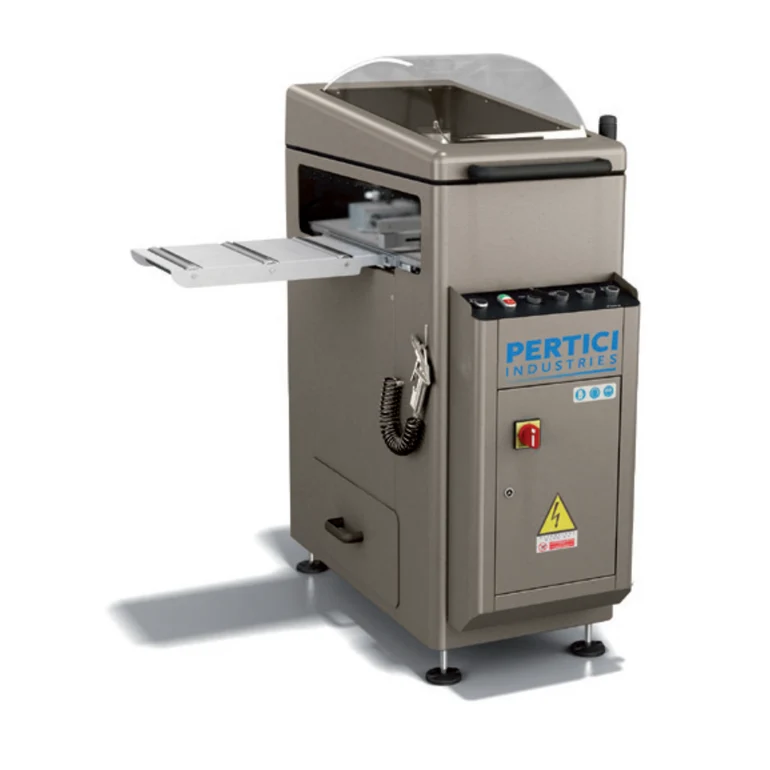
Machine guards, effective chip collection, and noise control are essential for maintaining a safer workshop while supporting consistent production. These features deserve attention before equipment enters operation.
Aluminium cutting machines equipped with proper safety systems help protect operators, reduce workplace hazards, and maintain cleaner, more controlled manufacturing environments.
Install reliable safety guards
Safety guards keep hands, clothing, and loose objects away from moving blades and cutting heads. Fixed guards protect areas that operators rarely access, while interlocked access panels stop machine operation when an operator opens a protected section.
Manufacturers should select guards that suit the machine design and allow routine inspections without exposing workers to unnecessary risks.
Protect operators during material loading
Loading aluminium profiles requires a clear working area and secure positioning. Operators should use suitable clamps, support rollers, and material stops to prevent sudden movement during cutting.
Properly arranged loading zones also reduce awkward lifting and contact with sharp edges. Clear operating instructions help workers follow consistent safety procedures throughout each shift.
Collect chips at the cutting point
Aluminium chips accumulate around blades, worktables, and machine enclosures. A dedicated chip collection system captures waste near its source and keeps production areas tidy. Vacuum extraction, chip conveyors, and collection trays suit different machine layouts.
Regular emptying prevents blockages and helps operators maintain clear access around the cutting station.
Prevent chip related damage
Loose chips can scratch finished aluminium surfaces, obstruct moving parts, and interfere with accurate positioning. Operators should remove accumulated waste at scheduled intervals and inspect conveyor paths during routine maintenance.
Suitable brushes and extraction systems help clear hard to reach sections. Workers should avoid removing chips by hand while machinery remains in motion.
Reduce workshop noise
Cutting blades, motors, compressed air, and vibrating panels contribute to workshop noise. Acoustic enclosures, vibration dampers, and sound absorbing panels help limit unwanted sound. Regular blade inspection also reduces noise caused by dull edges or poor alignment.
Operators should wear suitable hearing protection whenever workplace sound levels exceed safe exposure limits.
Maintain guards and collection systems
Routine inspections help identify loose panels, damaged seals, blocked extraction ducts, and worn conveyor components. Maintenance teams should test safety interlocks and emergency stops according to manufacturer instructions.
A simple inspection record helps supervisors track recurring faults and arrange repairs before minor problems interrupt production or threaten worker safety.